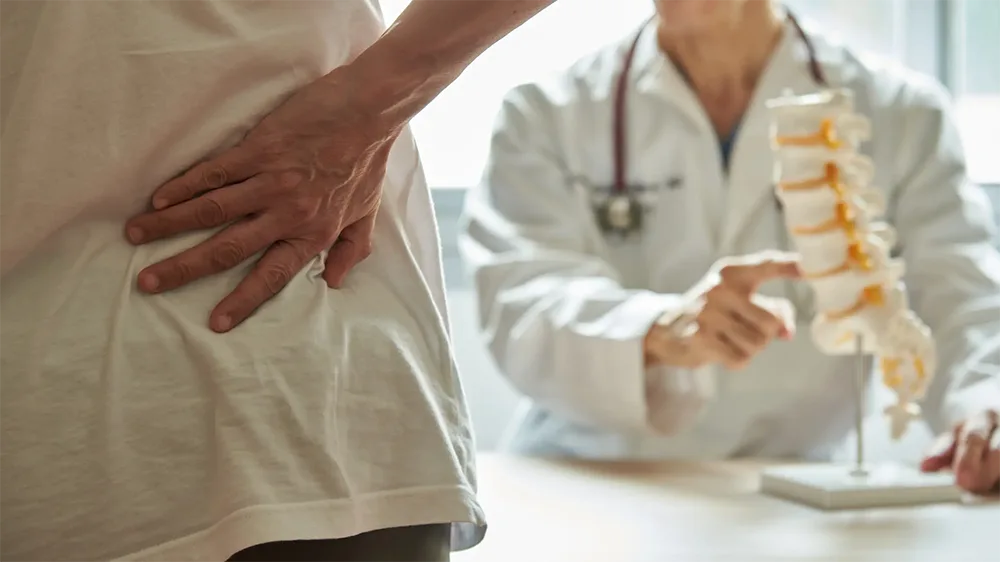


Disc-related spinal conditions are a common source of neck pain, back pain, and nerve-related symptoms, yet many patients are unsure about the difference between a bulging disc and a herniated disc. While the terms are often used interchangeably, they describe distinct changes that can occur within the spinal discs. Understanding these differences is important because the type and severity of disc involvement can influence symptoms, treatment recommendations, and long-term outcomes.
At Royal Spine Surgery in Scottsdale, AZ, patients are evaluated for a wide range of spinal conditions, including disc bulges, disc herniations, and nerve compression disorders. Learning how these conditions develop and how they affect the spine can help patients better recognize symptoms and understand when professional evaluation may be appropriate.
Understanding Spinal Discs and Common Disc Conditions
The spine is made up of vertebrae separated by intervertebral discs that act as cushions between the bones. These discs help absorb shock, distribute pressure during movement, and allow the spine to bend and flex while maintaining stability. Over time, however, age-related wear, repetitive stress, injury, and other factors can cause structural changes within the discs that may lead to pain, stiffness, or nerve compression.
Disc conditions exist on a spectrum, ranging from mild disc bulges to more significant herniations. While not every disc abnormality causes symptoms, changes in disc structure can sometimes place pressure on nearby nerves, resulting in discomfort, numbness, tingling, or weakness that affects daily activities.
What Spinal Discs Do and Why Disc Problems Occur
Each spinal disc consists of a tough outer layer called the annulus fibrosus and a softer, gel-like center known as the nucleus pulposus. Together, these structures help absorb forces placed on the spine during activities such as walking, lifting, twisting, and bending. Healthy discs contribute to spinal flexibility while protecting the vertebrae from excessive stress.
As discs naturally age, they may lose water content and become less flexible. This process, known as disc degeneration, can make discs more susceptible to bulging, protrusion, or herniation. Repetitive movements, poor body mechanics, heavy lifting, and traumatic injuries may also increase the risk of disc-related problems.
Understanding Disc Protrusions, Bulging Discs, and Herniated Discs
Disc protrusion is a broad term used to describe a disc that extends beyond its normal boundaries. A bulging disc occurs when a large portion of the disc extends outward, often affecting a significant portion of the disc’s circumference. In many cases, a bulging disc develops gradually as part of the natural aging process and may not cause noticeable symptoms.
A herniated disc occurs when a tear or weakness in the outer layer of the disc allows a portion of the inner disc material to push outward. Because herniated discs are more likely to irritate or compress nearby nerves, they are often associated with symptoms such as radiating pain, numbness, tingling, or weakness. Although both conditions involve changes in disc structure, the extent of disc displacement and nerve involvement can differ considerably between bulging and herniated discs.
Bulging Disc vs Herniated Disc: What Is the Difference?
Although bulging discs and herniated discs are both forms of disc abnormalities, they are not the same condition. The primary difference lies in how the disc changes shape and whether the inner disc material breaks through the outer layer. Understanding this distinction can help patients better understand why symptoms vary and why some disc conditions are more likely to cause nerve compression than others.
While both conditions can be identified through imaging studies and clinical evaluation, the presence of symptoms often depends on the location of the affected disc and whether nearby nerves become irritated or compressed. Some patients may have disc abnormalities without experiencing symptoms, while others develop significant pain and neurological changes.
How a Bulging Disc Affects the Spine
A bulging disc occurs when the outer portion of the disc extends beyond its normal boundary, typically affecting a broad area of the disc’s circumference. The outer disc layer remains intact, but the disc protrudes outward due to age-related degeneration, repetitive stress, or gradual structural changes within the spine.
Many bulging discs cause few or no symptoms and are sometimes discovered incidentally during imaging studies performed for other reasons. However, if the bulging disc narrows the space around nearby nerves or the spinal canal, it may contribute to localized pain, stiffness, or nerve-related symptoms, depending on the degree of compression.
How a Herniated Disc Develops and Impacts Nearby Nerves
A herniated disc develops when a tear or weakness forms in the outer layer of the disc, allowing a portion of the inner gel-like material to push outward. Because the inner disc material can extend into areas occupied by nearby nerves, herniated discs are often more likely to trigger inflammation, nerve irritation, and neurological symptoms.
When a herniated disc compresses a nerve root, patients may experience radiating pain, numbness, tingling, or muscle weakness that extends beyond the neck or back. The specific symptoms depend on the location of the herniation and which nerve is affected. In some cases, nerve compression can significantly impact mobility, strength, and daily function, making timely evaluation and treatment important.
Comparing Bulging Disc Symptoms and Herniated Disc Symptoms
The symptoms associated with bulging discs and herniated discs can overlap, which is one reason these conditions are often confused. Both may cause neck pain, back pain, stiffness, or discomfort when they affect nearby spinal structures. However, symptom severity often depends less on the size of the disc abnormality and more on whether nearby nerves are irritated or compressed.
At Royal Spine Surgery, patients are evaluated to determine whether disc-related symptoms originate from a bulging disc, herniated disc, or another spinal condition. A thorough assessment helps identify the source of symptoms and guide appropriate treatment recommendations.
Common Symptoms Associated with Disc Problems
Many disc conditions can produce localized pain in the neck or lower back, particularly when inflammation develops around the affected disc. Patients may also experience stiffness, reduced flexibility, muscle spasms, or discomfort that worsens with certain movements, prolonged sitting, or physical activity.
In some cases, disc abnormalities remain asymptomatic and are discovered only through imaging studies. When symptoms do occur, their severity often depends on the degree of inflammation and whether nearby nerves or other spinal structures are affected by the disc changes.
Recognizing Pinched Nerve Symptoms and Sciatica
When a bulging disc or herniated disc compresses a nearby nerve root, patients may develop symptoms commonly associated with a pinched nerve. These symptoms can include radiating pain, numbness, tingling, burning sensations, or weakness that extends beyond the spine into the arms or legs.
In the lower back, nerve compression may lead to sciatica, a condition characterized by pain that travels from the lower back into the buttock and down the leg along the path of the sciatic nerve. Depending on the severity of nerve involvement, patients may also experience changes in sensation, muscle weakness, or difficulty performing certain movements. Recognizing these neurological symptoms is important because they may indicate a need for further evaluation and treatment.
What Causes Disc Herniations and Disc Bulges?
Disc herniations and disc bulges can develop for a variety of reasons, often as a result of gradual changes in the spine over time. While some disc conditions are associated with a specific injury, many develop through a combination of age-related degeneration, repetitive stress, and everyday wear on the spinal structures. Understanding these contributing factors can help patients better recognize potential risk factors and take steps to support long-term spinal health.
Because spinal discs are subjected to constant pressure and movement throughout daily life, structural changes can occur even without a major traumatic event. The likelihood of developing a disc bulge or herniation often increases when multiple risk factors are present simultaneously.
Age-Related Degeneration and Disc Changes
One of the most common causes of disc bulges and herniations is age-related disc degeneration. As people get older, spinal discs gradually lose water content and elasticity, making them less resilient and less able to absorb stress. This natural aging process can cause discs to flatten, weaken, and become more susceptible to structural changes.
Over time, these degenerative changes may contribute to disc protrusions, bulging discs, or tears in the outer disc layer that can lead to a herniation. While disc degeneration is a normal part of aging, not everyone develops symptoms, and symptom severity can vary significantly from person to person.
Injury, Repetitive Stress, and Lifestyle Risk Factors
In addition to aging, acute injuries and repetitive mechanical stress can contribute to disc damage. Activities that involve frequent bending, twisting, lifting, or repetitive spinal loading may place additional strain on the discs, increasing the risk of disc protrusion or herniation over time.
Certain lifestyle factors may also influence spinal health. Poor posture, prolonged sitting, inadequate physical conditioning, excess body weight, and tobacco use have all been associated with increased stress on the spine and accelerated disc degeneration. While these factors do not guarantee that a disc problem will occur, they may contribute to the development or progression of disc-related conditions in some individuals.
Bulging Disc Treatment vs Herniated Disc Treatment
Treatment for bulging and herniated discs is often based on symptom severity, the degree of nerve involvement, and the extent to which the condition affects daily activities. Although the underlying disc abnormalities differ, many patients with either condition begin with conservative treatment approaches aimed at reducing pain, improving function, and relieving pressure on affected nerves.
The goal of treatment is not only to address current symptoms but also to help patients maintain mobility, improve quality of life, and support long-term spinal health. A comprehensive evaluation helps determine which treatment options may be most appropriate based on the patient’s diagnosis and individual needs.
Non-Surgical Treatment Options for Disc Pain
Many patients with disc-related pain improve without surgery. Non-surgical treatment options may include activity modification, physical therapy, anti-inflammatory medications, targeted exercise programs, and other conservative interventions to reduce inflammation and improve spinal function.
Physical therapy is often a key component of treatment because it can help strengthen supporting muscles, improve flexibility, and reduce stress on the affected area of the spine. Depending on the patient’s symptoms and diagnosis, additional non-surgical therapies may be incorporated into a personalized treatment plan designed to relieve discomfort and restore function.
When Surgical Treatment May Be Recommended
Surgical treatment may be considered when conservative therapies fail to provide adequate relief or when significant nerve compression causes progressive neurological symptoms. Persistent pain, worsening weakness, loss of sensation, or functional limitations that interfere with daily life may indicate the need for more advanced intervention.
The decision to pursue surgery is based on multiple factors, including imaging findings, symptom duration, response to non-surgical care, and overall patient health. When surgery is recommended, the objective is typically to relieve nerve compression, address the underlying spinal condition, and help restore mobility and quality of life while preserving as much normal spinal function as possible.
When Should You Seek Evaluation for Disc-Related Pain?
While occasional back or neck discomfort may improve with rest and conservative measures, persistent or worsening symptoms should not be ignored. Pain that continues for several weeks, interferes with daily activities, disrupts sleep, or limits mobility may indicate an underlying spinal condition that requires professional evaluation. Early diagnosis can help identify the source of symptoms and guide treatment before the condition progresses.
Patients should also seek medical attention if they experience radiating pain, numbness, tingling, muscle weakness, or changes in coordination. These symptoms may suggest nerve involvement and can become more difficult to manage if left untreated. A comprehensive spinal evaluation can help determine whether symptoms are related to a bulging disc, herniated disc, or another spinal condition.
Why Choose Royal Spine Surgery for Disc Herniation Treatment in Scottsdale, AZ
At Royal Spine Surgery, patients receive individualized care focused on accurately diagnosing spinal conditions and developing treatment plans tailored to their symptoms, goals, and lifestyle. Whether pain is caused by a bulging disc, herniated disc, nerve compression, or another spinal disorder, treatment recommendations are based on a thorough evaluation of the patient’s condition.
The practice offers comprehensive care that may include conservative treatment options, advanced diagnostic evaluation, and surgical solutions when appropriate. By focusing on both symptom relief and long-term spinal health, treatment plans are designed to help patients improve function, reduce pain, and return to their normal activities as safely as possible.
Schedule a Consultation to Discuss Your Symptoms and Treatment Options
If you are experiencing persistent neck pain, back pain, sciatica, numbness, tingling, or other symptoms that may be related to a disc condition, a professional evaluation can help provide clarity and direction. Understanding the source of your symptoms is an important first step toward developing an effective treatment strategy and preventing further complications.
To learn more, visit Royal Spine Surgery at 9377 E Bell Rd #343, Scottsdale, AZ 85260, call (480) 757-1813, or request an appointment through the online contact page. A personalized consultation can help determine the cause of your symptoms and explore treatment options designed to support lasting relief and improved spinal function.