

A herniated disc is one of the more common causes of back and neck pain, and one of the more reassuring diagnoses to receive. Most people improve without surgery, often within a few months, and the pain that feels unmanageable in week two is frequently much better by week eight.
At Royal Spine Surgery in Scottsdale, AZ, Dr. Mohamed Abdulhamid, MD, FAANS, FCNS evaluates herniated discs with two questions in mind: whether your symptoms are likely to settle with time and appropriate treatment, and whether anything about your presentation means waiting is not the right approach.
Almost all herniated disc symptoms warrant a prompt appointment rather than an emergency visit. The following are the exception. If you are experiencing either of these, go to an emergency department now rather than calling for an appointment.
Cauda equina syndrome is a surgical emergency. Decompression within the first hours meaningfully affects whether bladder, bowel and sexual function recover, which is why this cannot wait for an office appointment. If you are unsure whether what you are experiencing qualifies, treat it as though it does and be assessed. Two further symptoms warrant prompt rather than emergency assessment: sudden or worsening weakness in a leg or arm, and foot drop, meaning difficulty lifting the front of the foot. Both indicate significant nerve involvement. Call our Scottsdale office on 480-424-5255 the same day.
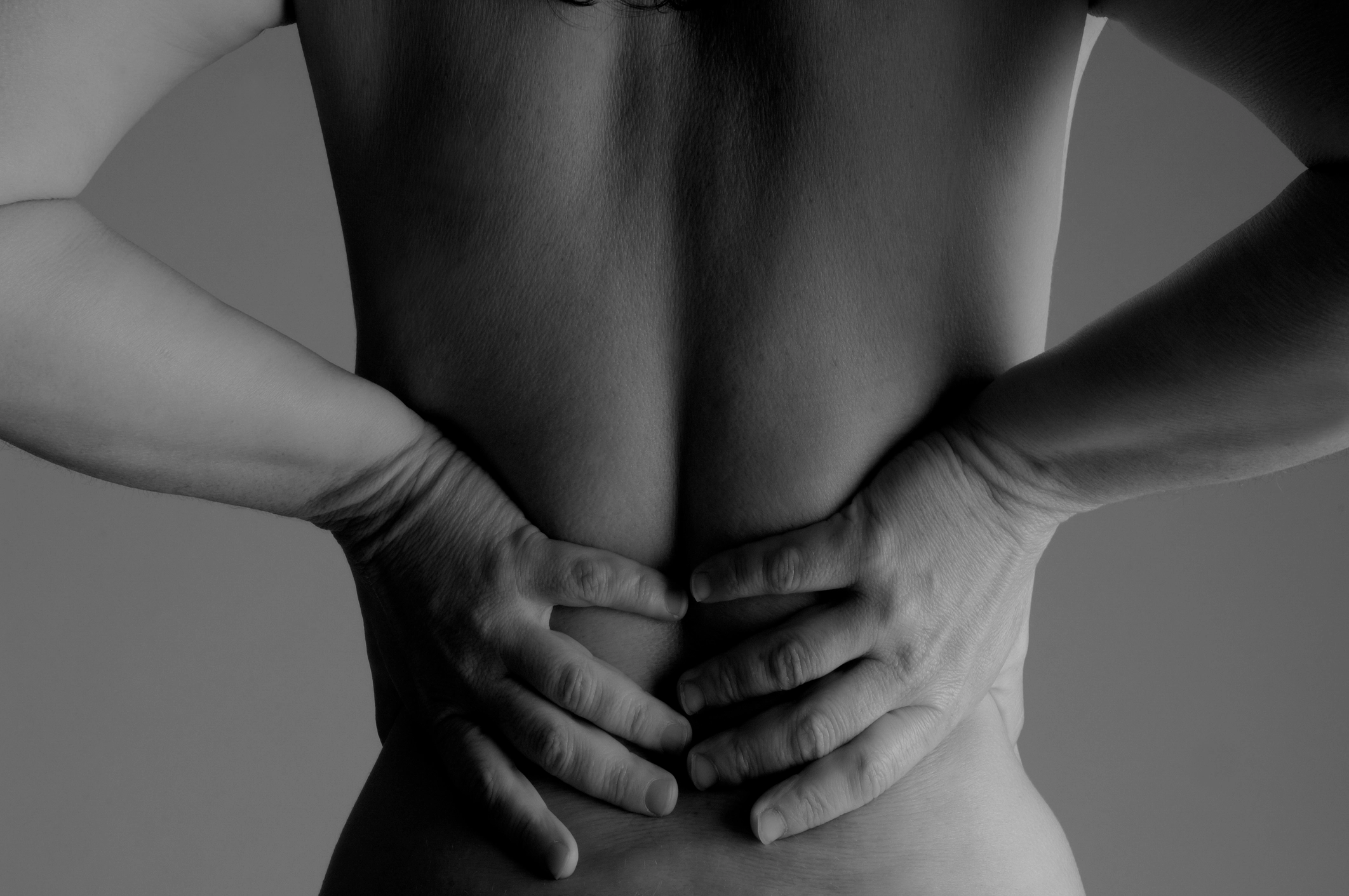
Spinal discs sit between the vertebrae and act as shock absorbers. Each has a tough outer wall, the annulus fibrosus, surrounding a softer gel-like center, the nucleus pulposus. A herniation occurs when the outer wall tears and some of that inner material pushes through.
The pain usually comes from what the displaced material presses on rather than from the disc itself. When it contacts a nerve root, the result is pain, numbness or weakness traveling along the path that nerve serves, which is why a lower back problem produces leg symptoms and a neck problem produces arm symptoms.
There is also a chemical component. The nucleus material provokes an inflammatory response when it contacts nerve tissue, which contributes to the pain independently of the physical pressure. That is part of why symptoms often settle over weeks as inflammation reduces, even when imaging still shows the herniation.
These terms are frequently used interchangeably, and they describe different things. The distinction matters when you are reading your own MRI report and trying to work out how concerned to be.
The practical point is that imaging findings do not always match symptoms. Bulging discs appear on the scans of a large proportion of people with no back pain whatsoever, which is why diagnosis rests on the examination and your symptom pattern rather than on the report alone.
Herniation can occur anywhere along the spine, though it is far more common in some regions than others. Where it happens determines which part of the body feels the symptoms.
The most common site, and where herniation most often produces sciatica.
The second most common, producing arm symptoms and sometimes cord compression.
Uncommon, since the ribcage limits movement through this region.
The structures themselves, which lose hydration and resilience with age.
The tough outer wall, whose tearing defines a herniation.
The gel-like inner material that displaces through the tear.
The channel the displaced material can intrude into.
The openings where nerve roots exit, which herniated material can narrow.
The structures most commonly compressed, and the source of radiating symptoms.
Can be compressed by cervical herniation, which is a different condition requiring different management.
Where symptoms appear with cervical herniation.
Where symptoms appear with lumbar herniation.
Frequently involved in lumbar herniation, often as the first area affected.
Symptoms depend on where the herniation is and which nerve it contacts. Many people have a herniated disc visible on imaging with no symptoms at all.
Often the first symptom, though leg pain frequently becomes the more troubling one.
Pain traveling from the lower back through the buttock and down the leg, following the sciatic nerve.
Pain traveling from the neck into the shoulder, arm, or hand.
Distinct from muscular ache, and often described as electric.
In the arms or legs, following the distribution of the affected nerve.
Indicates more significant nerve involvement and warrants prompt assessment.
A common presentation with cervical herniation.
Difficulty lifting the front of the foot. Assess promptly rather than waiting.
Reduced ability to bend, twist, or turn the head comfortably.
The surrounding muscles tighten protectively around the affected area.
Characteristic of lumbar herniation, since these positions increase disc pressure.
Common where nerve compression is significant.
Frequently the thing that finally prompts an appointment.
An emergency. See the section above rather than treating this as one symptom among many.
This is the part worth understanding properly, because the answer differs from some other spinal conditions. The majority of herniated discs improve substantially without surgery, typically within six to twelve weeks, and conservative treatment is the appropriate first approach for most patients.
That happens for two reasons. Inflammation around the nerve reduces over time, and the herniated material itself often shrinks as the body reabsorbs it. Imaging repeated months later frequently shows a smaller herniation than the original scan, without any intervention.
Avoiding the specific movements that aggravate symptoms, while staying as active as comfort allows. Prolonged bed rest is not recommended and generally slows recovery.
Targeted rehabilitation to reduce pressure on the nerve, restore movement, and build support around the affected segment.
To address the inflammatory component around the nerve root.
Delivered close to the affected nerve, useful for both symptom relief and for confirming which level is responsible.
Broader support for recovery and long-term spinal health alongside targeted treatment.
Surgery becomes the reasonable option in a smaller group of cases. The criteria are fairly consistent, and none of them is simply how much pain you are in.
Typically after six to twelve weeks of appropriate conservative care without meaningful improvement.
Weakness that is worsening rather than stable, which changes the calculation.
Where pain or weakness is preventing work, sleep, or daily activity despite treatment.
Cauda equina syndrome requires emergency surgery regardless of how long symptoms have been present.
A minimally invasive approach to removing the herniated portion, using a small tubular retractor that limits disruption to surrounding muscle.
For cervical herniation, replacing the disc with an artificial one and preserving motion at that level.
Recovery from a microdiscectomy is generally faster than patients expect. Most go home the same day or the following morning, and leg pain from nerve compression frequently improves immediately, since the pressure has been removed.
Back discomfort from the incision itself takes longer and typically settles over a few weeks. Walking is encouraged from the first day. Bending, lifting, and twisting are restricted for a period your surgeon will specify, usually several weeks, to protect the disc while the outer wall heals.
Most patients with desk-based work return within two to four weeks, and those with physically demanding jobs generally need longer. Numbness and weakness can take months to improve, since nerves recover more slowly than pain resolves, and some residual numbness occasionally persists.
Herniated discs frequently occur alongside other spinal conditions. The symptoms overlap enough that examination and imaging are what establish which one is actually driving your presentation.
The radiating leg pain most commonly caused by lumbar disc herniation.
Narrowing of the spinal canal, which can coexist with herniation and produces a different pain pattern.
Spinal cord compression in the neck, which a cervical herniation can contribute to and which is managed differently.
Nerve root compression in the lower back, of which disc herniation is the most common cause.
Leg symptoms brought on by walking and relieved by sitting, typically associated with stenosis rather than herniation.
For a condition where most patients improve without surgery, the value of a surgical practice lies in knowing when not to operate. That judgment is what you are actually seeking at a consultation.
Dr. Mohamed Abdulhamid, MD, FAANS, FCNS, is a Fellow of the American Association of Neurological Surgeons and of the Congress of Neurological Surgeons.
Most herniated discs are managed without surgery here, and you will be told honestly where your symptoms sit on that spectrum.
Where surgery is appropriate, approaches such as microtube spine surgery limit disruption to surrounding tissue.
SpineVive and BodyVive provide therapy and recovery support within the same practice.
You will leave knowing which symptoms mean call us, which mean wait and see, and which mean go to an emergency department.
CareCredit is accepted for eligible treatment.
If back or neck pain is radiating into a limb, an assessment will establish whether a disc is responsible and whether your symptoms are the kind that settle with time or the kind that need intervention. Most patients are relieved by the answer.
Call 480-424-5255 or request a consultation at Royal Spine Surgery, 9377 E Bell Rd #343, Scottsdale, AZ 85260. We serve patients across Scottsdale and the greater Phoenix area, Monday to Thursday, 8 a.m. to 5 p.m., and Friday, 8 a.m. to 3 p.m.
A bulging disc extends beyond its normal margin with the outer wall still intact, usually bulging evenly around the circumference. It is extremely common with age and frequently causes no symptoms at all. A herniated disc means the outer wall has torn and inner material has pushed through, usually in one direction.
Herniations are more likely to cause symptoms because the extruded material can contact a nerve directly. That said, imaging findings and symptoms do not always match. Bulging discs appear on scans of many people with no back pain, which is why diagnosis depends on your examination and symptom pattern rather than the MRI report alone.
Frequently, yes, and this is the most reassuring thing to know about the condition. Most herniated discs improve substantially within six to twelve weeks without surgery. Inflammation around the nerve subsides, and the herniated material itself often shrinks as the body reabsorbs it.
Follow-up imaging months later commonly shows a smaller herniation than the original scan with no intervention at all. That is why conservative treatment is the first approach for most patients, and why time is a legitimate part of the plan rather than an absence of one.
Surgery is generally considered when symptoms persist despite six to twelve weeks of appropriate conservative treatment, when weakness is progressing rather than stable, or when pain is preventing work, sleep, and daily activity. Those three are the usual triggers.
There is one exception to the waiting period. Cauda equina syndrome, indicated by loss of bladder or bowel control or numbness in the groin and inner thighs, requires emergency surgery regardless of how long symptoms have been present. If that describes what you are experi
Faster than most patients expect. Most go home the same day or the following morning, and the leg pain caused by nerve compression frequently improves straight away because the pressure has been removed. Back discomfort from the incision settles over a few weeks.
Walking is encouraged from day one, while bending, lifting and twisting are restricted for several weeks to protect the disc while the outer wall heals. Desk-based work is usually possible within two to four weeks. Numbness and weakness improve more slowly, over months, because nerves recover at a different pace from pain.
That depends on which symptoms. Increasing pain is unpleasant but not itself alarming, and it is worth calling the office to review your treatment plan. Worsening weakness in an arm or leg, or new foot drop, means being seen the same day rather than waiting.
Any change in bladder or bowel function, or numbness in the groin, buttocks, or inner thighs, means going to an emergency department immediately. That combination can indicate cauda equina syndrome, where treatment within hours affects whether function recovers.
Not always at first. For typical symptoms without red flags, treatment often begins based on examination alone, since imaging early on rarely changes the plan when conservative care is the recommendation regardless.
MRI becomes useful where symptoms persist beyond several weeks, where there is neurological deficit, where surgery is being considered, or where red flags are present. In those situations, it identifies which level is responsible and how much compression exists.
Usually yes, and staying active generally helps. Prolonged bed rest is not recommended and tends to slow recovery. What matters is which activity: walking is almost always beneficial, while heavy lifting, repeated bending, and high-impact activity typically aggravate symptoms early on.
Physical therapy is a better route than working it out alone. The useful exercises differ depending on where the herniation sits and how your symptoms behave with movement, which is difficult to judge for yourself.
Not for most people. The majority recover well and return to full activity, and recurrence at the same level, while possible, is not the usual outcome. Age-related disc change continues regardless, but that is not the same as ongoing pain.
What reduces the likelihood of further problems is maintaining core strength, sensible lifting technique, and a stable weight. Those are worth building in during recovery rather than after a second episode.
Royal Spine Surgery holds a 4.8-star rating from 207 Google reviews

