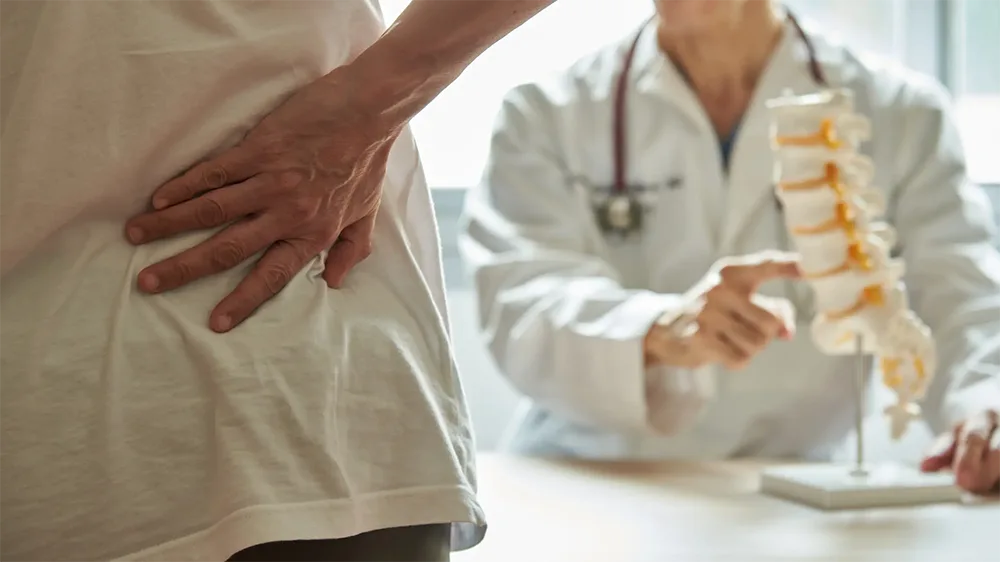


For many people dealing with lumbar spinal stenosis, the thought of undergoing major spinal surgery like a fusion can be overwhelming. Traditional spinal fusion is often recommended to address this painful condition, but it comes with a long recovery time and potential loss of mobility in the back.
If you’re looking for a less invasive option that allows for quicker recovery while maintaining spinal flexibility, the Coflex procedure may be the solution you need.
In this guide, we’ll break down what Coflex spine surgery is, how it works, and why it could be the better choice for managing your back pain.
What Is Lumbar Spinal Stenosis?
Before we dive into the Coflex procedure, let’s quickly review the condition it treats: lumbar spinal stenosis. This condition occurs when the spinal canal in your lower back narrows, putting pressure on the spinal cord and nerves. This pressure can lead to symptoms like chronic lower back pain, numbness, tingling, and even weakness in the legs. Many patients also find it hard to walk or stand for long periods, significantly affecting their quality of life.
While treatments such as physical therapy and injections can help manage symptoms, many people eventually need surgery. Until recently, spinal fusion was the most common surgical option, which involves permanently joining two or more vertebrae to stabilize the spine. While fusion can be effective, it also comes with some drawbacks—long recovery time, a risk of complications, and loss of motion in the spine. This is where the Coflex lumbar spinal stenosis procedure comes in as a promising alternative.
The Coflex Procedure: A Game-Changer in Spinal Surgery
The Coflex for spinal stenosis is a newer, minimally invasive option designed specifically for people with lumbar spinal stenosis. Instead of fusing your vertebrae together, the Coflex procedure uses a small titanium implant shaped like a “U” that is inserted between two vertebrae in your lower back. This Coflex implant helps keep the space between your vertebrae open, reducing pressure on the spinal cord and nerves.
Unlike spinal fusion, which locks two vertebrae together and limits movement, the Coflex implant allows you to keep most of the natural motion in your spine. This is a major benefit for people who want pain relief but don’t want to lose flexibility.
To learn more, check out this video of Dr. Abdulhamid of Royal Spine Surgery explaining how Coflex implant surgery works and why it’s an effective option for many patients.
How the Coflex Procedure Works
The Coflex spinal stenosis implant surgery starts with a minimally invasive decompression procedure, where the surgeon removes parts of the bone or thickened tissue that are pinching the spinal nerves. Once this is done, the Coflex spinal implant is inserted between the vertebrae. The best part? It’s a non-fusion solution, meaning no screws, rods, or bone grafts are required.
The procedure itself usually takes less than two hours, and many patients can return home the same day. Recovery is typically much faster than with spinal fusion, and patients often experience less postoperative pain.
Why Choose Coflex Surgery for Spinal Stenosis Over Spinal Fusion?
If you’ve been told that spinal fusion is your only option for managing your spinal stenosis, you’ll want to take a look at what the Coflex procedure offers. Here are a few key reasons why more people are choosing Coflex:
1. Faster Recovery with Less Pain
One of the most significant advantages of Coflex surgery is that it’s less invasive than spinal fusion. This means smaller incisions, less damage to your muscles, and less blood loss during surgery. Patients can often walk within hours after surgery and return to light activities much sooner than they could with spinal fusion.
Most patients report a much quicker recovery time with Coflex compared to fusion. With spinal fusion, recovery can take several months, but with Coflex, many people are back to their normal lives in just a few weeks.
2. Preserves Your Spinal Flexibility
The Coflex procedure allows you to keep more of your natural spinal motion. This is a big deal because spinal fusion locks the vertebrae together, limiting your range of motion. In contrast, the Coflex spinal implant supports your spine while still allowing it to move naturally, reducing the risk of adjacent segment disease—a condition where the vertebrae next to the fused area start to deteriorate over time.
3. Lower Risk of Complications
Because Coflex surgery doesn’t require the use of rods, screws, or bone grafts, there’s a lower risk of complications compared to spinal fusion. Spinal fusion can sometimes lead to infection, hardware failure, or nerve damage. With Coflex, the procedure is less invasive, which generally means fewer risks.
4. Proven to Relieve Pain
Research and clinical studies have shown that Coflex surgery provides excellent relief from the symptoms of lumbar spinal stenosis. Patients consistently report reductions in pain and improved mobility after the procedure. The long-term results are comparable to spinal fusion, but with fewer downsides.
5. Works for a Wide Range of Patients
The Coflex procedure is ideal for a variety of patients, particularly those who haven’t had success with other treatments like physical therapy or epidural injections. Whether you’re an older adult dealing with chronic back pain or someone looking to avoid the long recovery associated with fusion, the Coflex procedure for spinal stenosis offers a flexible solution with great outcomes.
What to Expect During Recovery
One of the biggest benefits of Coflex surgery is the shorter recovery time compared to spinal fusion. Most patients are up and walking just hours after the procedure, and the majority can return home within a day or two.
During the first few weeks, you’ll need to avoid heavy lifting, twisting, or bending to allow your spine to heal properly. Your surgeon may recommend physical therapy to help you strengthen your back muscles and improve your range of motion.
Overall, the Coflex surgery recovery time is much shorter than with traditional spinal fusion, and most patients can get back to light activities within a few weeks. Full recovery may take a few months, but it’s typically faster than the alternative.
Long-Term Outcomes with Coflex
The long-term outcomes of Coflex spinal implant surgery are promising. Many patients report lasting relief from pain and significantly improved mobility. The Coflex implant is designed to be durable, providing ongoing support without limiting movement. This means you can stay active without worrying about the complications that can arise with spinal fusion.
Since Coflex surgery preserves your spinal motion, it helps protect your overall spinal health, reducing the need for further surgeries down the road.
Is Coflex Surgery Right for You?
If you’ve been living with the pain and discomfort of lumbar spinal stenosis, the Coflex procedure could offer the relief you’ve been waiting for. With its minimally invasive approach, faster recovery time, and ability to preserve your spinal mobility, the Coflex procedure for spinal stenosis is an excellent alternative to traditional spinal fusion.
Ready to explore your treatment options? Contact Royal Spine Surgery today to schedule a consultation and discuss whether the Coflex procedure is right for you.