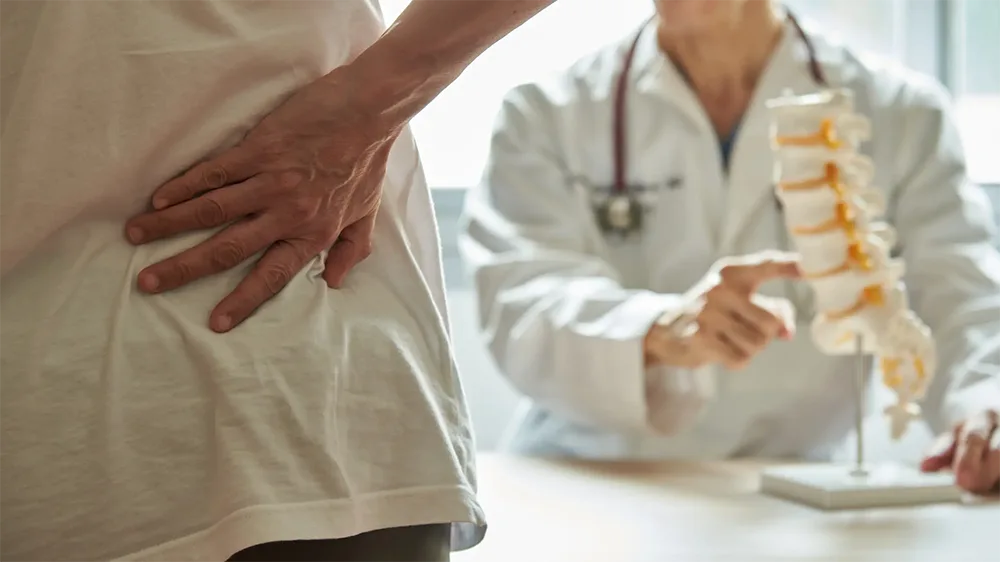


Back and neck pain are among the most common musculoskeletal complaints, but in some cases, these symptoms may be linked to a herniated disc. When a spinal disc becomes damaged or displaced, it can place pressure on nearby nerves, leading to symptoms that extend beyond localized discomfort. Depending on the location and severity of the herniation, patients may experience pain, numbness, tingling, or weakness that affects daily activities and overall quality of life.
At Royal Spine Surgery in Scottsdale, AZ, patients are evaluated for a variety of spinal conditions, including cervical and lumbar disc herniations. Understanding the warning signs of a herniated disc and knowing when symptoms may indicate a more significant spinal issue can help patients seek appropriate evaluation and treatment before symptoms progress.
What Is a Herniated Disc?
A herniated disc occurs when the soft inner portion of a spinal disc pushes through a tear or weakened area in the tougher outer layer. Spinal discs act as cushions between the vertebrae, helping absorb shock and support flexibility throughout the spine. When a disc herniates, nearby nerves may become irritated or compressed, leading to symptoms that can range from mild discomfort to significant pain and neurological changes.
Disc herniations can develop gradually due to age-related degeneration or occur more suddenly following repetitive strain, heavy lifting, or injury. While some herniated discs cause few or no symptoms, others can result in persistent pain and functional limitations that require medical evaluation.
Understanding Disc Herniation and Spinal Anatomy
The spine is made up of vertebrae separated by intervertebral discs, which function as shock absorbers and help facilitate movement. Each disc consists of a tough outer layer called the annulus fibrosus and a softer, gel-like center known as the nucleus pulposus. When the outer layer weakens or tears, part of the inner material may protrude outward, creating a disc herniation.
The location of the herniation often influences the symptoms a patient experiences. If displaced disc material compresses nearby spinal nerves, it can cause pain, numbness, tingling, or weakness along the path of the affected nerve. Symptoms may develop in the neck, arms, lower back, buttocks, or legs depending on the area of the spine involved.
Herniated Disc vs. Slipped Disc: Are They the Same Thing?
The terms “herniated disc” and “slipped disc” are often used interchangeably, although “slipped disc” is not a formal medical diagnosis. In reality, the disc itself does not slip out of place. Instead, the inner disc material protrudes through a weakened area of the disc’s outer layer, creating what physicians refer to as a disc herniation.
Because the phrase “slipped disc” is widely recognized by patients, it is commonly used when discussing symptoms and treatment options. Regardless of the terminology, the condition involves changes within the disc that may lead to nerve compression, inflammation, and the symptoms associated with cervical or lumbar disc herniation.
Common Herniated Disc Symptoms
The symptoms of a herniated disc can vary significantly depending on the location of the affected disc and whether nearby nerves are being compressed. While some individuals experience only localized neck or back pain, others may develop symptoms that radiate into the arms or legs and interfere with daily activities such as walking, lifting, sitting, or sleeping comfortably.
In many cases, symptoms develop gradually and may worsen over time as inflammation and nerve irritation increase. Recognizing the common warning signs of a herniated disc can help patients seek evaluation before symptoms worsen or begin to affect strength, mobility, or function.
Herniated Disc Pain, Numbness, and Tingling
Pain is often the most noticeable symptom of a herniated disc. Patients may experience localized discomfort in the neck or lower back, as well as radiating pain that travels along the path of an affected nerve. Depending on the location of the herniation, pain may extend into the shoulders, arms, buttocks, thighs, or legs.
In addition to pain, many patients report numbness, tingling, or a “pins and needles” sensation. These symptoms occur when nerve tissue becomes irritated or compressed by the herniated disc. The affected sensations often follow a predictable pattern based on which spinal nerve is involved, helping physicians identify the source of the problem during evaluation.
How Symptoms Can Vary Based on Nerve Involvement
The specific symptoms associated with a herniated disc often depend on which nerve or nerve root is affected. A small herniation that does not contact nearby nerves may cause little to no symptoms, while a larger herniation compressing a nerve can lead to significant pain, sensory changes, or weakness.
For example, nerve compression in the cervical spine may cause symptoms radiating to the shoulders, arms, or hands, whereas lumbar disc herniations commonly affect the lower back, buttocks, and legs. The severity and location of symptoms provide important clues that help guide diagnosis and treatment planning, particularly when neurological symptoms such as weakness or changes in coordination are present.
Cervical Disc Herniation vs. Lumbar Disc Herniation Symptoms
Disc herniations can occur anywhere along the spine, but they are most commonly diagnosed in the cervical spine (neck) and lumbar spine (lower back). Because these regions affect different nerves, the symptoms patients experience can vary considerably depending on the location of the herniated disc and the structures involved.
At Royal Spine Surgery, evaluation of cervical and lumbar disc herniations focuses on identifying the source of nerve compression and understanding how symptoms affect daily function. Recognizing the differences between cervical and lumbar disc herniation symptoms can help patients better understand when neck pain, arm symptoms, back pain, or leg pain may be related to a spinal condition.
Common Symptoms of Cervical Disc Herniation
A cervical disc herniation occurs when a disc in the neck places pressure on one or more nearby nerve roots. This may lead to neck pain that radiates into the shoulder, arm, hand, or fingers. Patients often describe symptoms such as burning pain, numbness, tingling, or altered sensation that follows a specific nerve distribution.
In more significant cases, nerve compression may contribute to muscle weakness, reduced grip strength, difficulty lifting objects, or challenges performing fine motor tasks. Symptoms may affect one side of the body more than the other, depending on the location and severity of the herniation.
Common Symptoms of Lumbar Disc Herniation and Sciatica
Lumbar disc herniations affect the lower back and are a common cause of sciatica symptoms. When a herniated disc compresses the sciatic nerve or one of its contributing nerve roots, pain may radiate from the lower back into the buttock, thigh, calf, or foot. Many patients describe the discomfort as sharp, shooting, burning, or electric-like in nature.
In addition to radiating pain, lumbar disc herniations may cause numbness, tingling, muscle weakness, or difficulty with prolonged standing, walking, or sitting. Depending on the affected nerve, symptoms may extend down one leg and interfere with mobility, balance, and everyday activities.
Recognizing Pinched Nerve Symptoms
One of the most significant consequences of a herniated disc is nerve compression. When displaced disc material irritates or compresses a nearby nerve root, patients may develop symptoms that extend beyond the neck or back and travel into other areas of the body. These symptoms are often referred to as pinched nerve symptoms and can vary in severity depending on the degree of nerve involvement.
While pain is commonly the first symptom patients notice, nerve compression may also affect sensation, muscle function, and mobility. Understanding these warning signs can help patients recognize when persistent symptoms may warrant a more comprehensive spinal evaluation.
Why Herniated Discs Can Cause Radiating Pain
Radiating pain occurs when a herniated disc places pressure on a spinal nerve that travels from the spine to another part of the body. Instead of remaining localized to the neck or lower back, the pain follows the path of the affected nerve and may be felt in the shoulders, arms, hands, buttocks, legs, or feet.
This type of nerve-related pain is often described as sharp, burning, shooting, or electric-like. Because the symptoms travel along a nerve pathway, patients may experience discomfort far from the actual location of the disc herniation. The specific radiating pain pattern often provides important diagnostic information about which nerve is affected.
When Weakness, Numbness, or Mobility Changes May Occur
As nerve compression becomes more significant, patients may begin to experience symptoms beyond pain alone. Numbness and tingling can develop when sensory nerve signals are disrupted, while muscle weakness may occur if motor nerves are affected. These changes can make routine activities more challenging and may indicate a more advanced level of nerve involvement.
Depending on the location of the herniated disc, patients may notice reduced grip strength, difficulty lifting objects, leg weakness, balance changes, or limitations in walking and other movements. When weakness, progressive numbness, or worsening mobility changes occur, prompt medical evaluation is important to assess the extent of nerve compression and determine the most appropriate treatment approach.
Herniated Disc Treatment Options
Treatment for a herniated disc depends on several factors, including symptom severity, the degree of nerve compression, how long symptoms have been present, and how significantly they affect daily life. Many patients improve with conservative treatment measures, particularly when symptoms are identified and addressed early.
The goal of treatment is to reduce pain, improve function, relieve pressure on affected nerves, and help patients return to normal activities whenever possible. A comprehensive evaluation helps determine which treatment options may be most appropriate based on the individual’s condition and treatment goals.
Non-Surgical Herniated Disc Treatment Approaches
Many patients with herniated disc symptoms can find relief through non-surgical treatment approaches. Conservative care may include activity modification, physical therapy, anti-inflammatory medications, targeted exercises, and other treatments to reduce inflammation and support healing.
Physical therapy is often an important component of treatment because it can help improve spinal stability, flexibility, posture, and overall function while reducing stress on the affected area. Depending on the patient’s symptoms and diagnosis, additional non-surgical interventions may be considered as part of a personalized treatment plan to manage pain and improve quality of life.
When Advanced Treatment or Surgery May Be Considered
Advanced treatment options may be considered when symptoms persist despite conservative care or when significant nerve compression affects strength, sensation, or daily function. Patients who continue to experience severe pain, progressive weakness, worsening neurological symptoms, or substantial limitations in mobility may benefit from further evaluation to determine whether more advanced intervention is appropriate.
In some cases, surgical treatment may be recommended to relieve nerve compression and address the underlying disc pathology. The decision to pursue surgery is based on factors such as symptom duration, imaging findings, neurological deficits, and the patient’s overall health and treatment goals. When surgery is considered, treatment planning focuses on selecting the most appropriate approach to restore function, reduce symptoms, and support long-term spinal health.
When Should You Seek Evaluation for Herniated Disc Symptoms?
While some episodes of neck or back pain improve with time and conservative care, persistent or worsening symptoms should not be ignored. Pain that radiates into the arms or legs, ongoing numbness or tingling, muscle weakness, or changes in mobility may indicate nerve involvement that warrants professional evaluation. Early diagnosis can help identify the underlying cause of symptoms and allow treatment to begin before the condition progresses.
Patients should also seek medical attention if symptoms interfere with daily activities, limit work or recreational pursuits, or fail to improve with conservative measures. A comprehensive spinal evaluation can help determine whether symptoms are related to a herniated disc or another condition and provide guidance on the most appropriate treatment options.
Why Choose Royal Spine Surgery for Herniated Disc Treatment in Scottsdale, AZ
At Royal Spine Surgery, patients receive individualized care focused on accurately diagnosing spinal conditions and developing treatment plans tailored to their needs. Whether symptoms stem from a cervical disc herniation, lumbar disc herniation, sciatica, or another source of nerve compression, the goal is to identify the underlying cause and recommend the most appropriate path forward.
The practice offers comprehensive evaluation and treatment for a wide range of spinal conditions, emphasizing both conservative management strategies and advanced surgical solutions when necessary. By combining specialized expertise with patient-centered care, treatment plans are designed to help reduce pain, restore function, and support long-term spinal health.
Schedule a Consultation to Discuss Your Symptoms and Treatment Options
If you are experiencing persistent back pain, neck pain, sciatica symptoms, numbness, tingling, or weakness that may be related to a herniated disc, a professional evaluation can help provide answers. Understanding the cause of your symptoms is the first step toward developing an effective treatment plan and preventing further complications.To learn more, visit Royal Spine Surgery at 9377 E Bell Rd #343, Scottsdale, AZ 85260, call (480) 757-1813, or request an appointment through the online contact page. A personalized consultation can help determine the source of your symptoms and explore treatment options designed to improve comfort, mobility, and quality of life.